The equation $$ \int_{0}^{2\pi}\log\left(% \left[1 + \sin\left(x\right)\right]^{1 + \cos\left(x\right)} \over 1 + \cos\left(x\right) \right)\,{\rm d}x = 0 $$. Has been bothering me for a few days now. Note that the case from $0$ to $\pi/2$ has already been dealt with earlier. Some of the problems with the integral is the singularities at $x=\pi$ and $x=3\pi/2$, hower as the right and left limits agree the integral does not diverge.
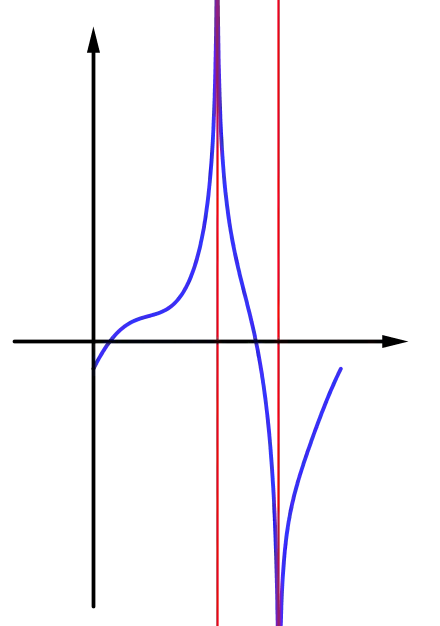
Now I want to obtain the answer through substitutions and algebraic manipulation. I want to avoid all series representations (Catalan’s Constant) and alike.
I think one has to split the integrals to avoid the singularities and then show they are alike without explicitly evalutating them. Note
$$ \int_0^{2\pi} f(x) \mathrm{d}x = \int_0^\pi f(x) \mathrm{d}x + \int_\pi^{3\pi/2} f(x) \mathrm{d}x + \int_{3\pi/2}^{2\pi} f(x) \mathrm{d}x $$ Explicit calculations one have $$ \int_0^{\pi/2} f(x)\mathrm{d}x = -1 + 2\log 2 \quad \, \quad \int_{\pi}^{3\pi/2} f(x)\mathrm{d}x = 1 \\ \int_{\pi/2}^{\pi} f(x)\mathrm{d}x = 1 + 4 K-2 \log 2 \quad \, \quad \int_{3\pi/2}^{2\pi} f(x)\mathrm{d}x = -1 - 4 K $$ Where $K$ is Catalan's constant. Now the sum is of course zero, but is it possible to show this without evaluating $4$ integrals? The two first integrals I have been able to show $$ \begin{align*} \int_{\pi}^{3\pi/2} f(x)\,\mathrm{d}x & = \frac{1}{2}\int_{\pi}^{3\pi/2} f(x) + f(\pi-x)\,\mathrm{d}x \\ & = \frac{1}{2}\int_{\pi}^{3\pi/2} \log(1+\cos x)\sin x+ \log(1+\sin x)\cos x\,\mathrm{d}x \\ & = \frac{1}{2}\int_0^{-1} \log(1+u) + \log(1+u)\,\mathrm{d}x = 1 \end{align*} $$ Is it perhaps possible to find $$ \int_{3\pi/2}^{2\pi} f(x)\mathrm{d}x + \int_{\pi/2}^{\pi} f(x)\mathrm{d}x = -2 \log 2 $$ ?


