This delightful animation by Stefan Nadelman depicts "the additive evolution of prime numbers", set to Lost Lander's song "Wonderful World": http://www.youtube.com/watch?v=TZkQ65WAa2Q. (If you haven't watched it, you may want to do so before reading the rest of the question.)
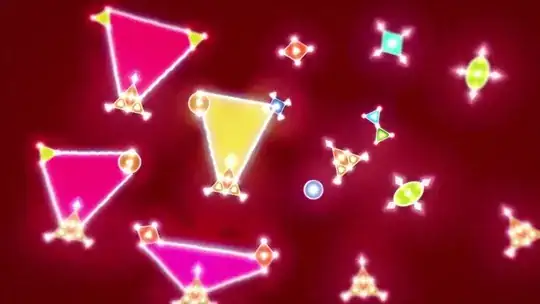
Counting $1$ as prime, the video shows a prime number growing up to $23$ by absorbing smaller primes during the first verse and chorus. In the second verse, swarms of $23$s and $53$s feed to form all the remaining two-digit primes from $29$ through $89$. During the final chorus, these primes then join together to form the primes $97, 131, 331, 281, 251$, and finally $863$. The video demonstrates that $863$ is the sum of 15 consecutive primes:
$$863 = 29 + 31 + 37 + 41 + 43 + 47 + 53 + 59 + 61 + 67 + 71 + 73 + 79 + 83 + 89.$$
Is this just a coincidence? Is $863$ special? Or is there a reason to expect that a prime of about this size would be a consecutive sum of so many other primes?
Obviously there's a lot of room for artistic license in designing an animation like this one. I'm interested in the ways that non-trivial mathematical considerations constrain the artist to choose certain designs over others, because through those constraints, the art might teach us something about mathematics. I'd hate to think that it's just eye candy. So, in general, do you see any interesting patterns that the casual viewer might miss?
Edit: For reference, here are the sums represented in the video:
$$\begin{alignat*}{2} 1+1={}&2\\ 2+1={}&3\\ 3+2={}&5\\ 5+2={}&7\\ 7+1+1+1+1={}&11\\ 11+2={}&13\\ 13+1+1+1+1={}&17\\ 17+2={}&19\\ 19+1+1+1+1={}&23\\\\ 23+3+3={}&29\\ 23+3+5={}&31\\ 23+7+7={}&37\\ 23+5+13={}&41\\ 23+1+19={}&43\\ 23+7+17={}&47\\ 23+11+19={}&53\\\\ 53+1+5={}&59\\ 53+1+7={}&61\\ 53+1+13={}&67\\ 53+1+17={}&71\\ 53+1+19={}&73\\\\ 53+7+19={}&79\\ 53+7+23={}&83\\ 53+5+31={}&89\\\\ 29+31+37={}&97\\ 41+43+47={}&131\\\\ 59+61+67+71+73={}&331\\\\ 53+97+131={}&281\\ 79+83+89={}&251\\ 253+281+331={}&863\\ \end{alignat*}$$

