I'm not an expert in this area.
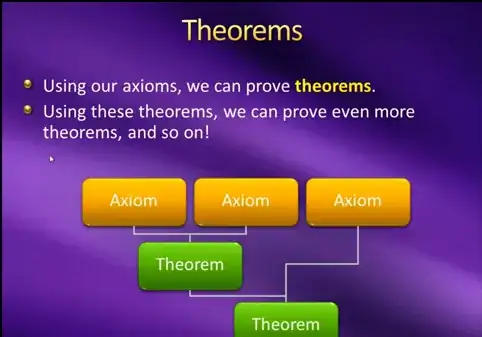
There are a number of concepts related to your question. On one level, there are formal verification projects which use computers to check the logical consistency of mathematical statements as deduced from some starting point (like axioms). Once you agree that proof-checking is computationally straightforward, then the question becomes "How to enter a proof into the computer?" You could do it manually, entering the entire proof by hand using something resembling a programming language. But really you'd want the machine to help out. At the next level, you find proof assistants to help with the data entry process. In a perfect world, you'd want to enter the theorem and have the machine return a proof; you want an automated theorem prover. This is hard.
Once you have a system to encode and verify mathematics using a computer, then you would probably want start developing a large body of verified mathematics. These formally verified libraries exist. The Mizar system is one such example and you can navigate the dependency tree of their articles from their journal of formalized mathematics. Similar projects include HOL Light and Metamath. HOL Light has been used to formalize 100 theorems, whereas Metamath has a tool called the Hilbert Space Explorer.
Once you have the dependency tree, you can do neat visualizations and even determine important ideas in mathematics. The blogger/graduate student Andy Reagan entered the "theorem network" in Rudin's Principles of Mathematical Analysis into a computer and ran Google's PageRank algorithm. You can read about the results and even download the network files at the link provided. Khan Academy uses a similar idea for their Exercise Dashboard, combining a dependency tree and mastery learning to introduce new topics as only after you understand the existing material.
These last two examples are closer to your question than the formal systems I mentioned in the first half of the post. Even though I think Khan's experiments combining a dependency tree and mastery learning only scratch the surface of what's possible pedagogically, there's a huge benefit in simply taking out a pen and paper and building a knowledge tree yourself.