It would be possible to implement the HMAC construction with (draft) SHA-3, leading to HMAC-SHA3-224, HMAC-SHA3-256, HMAC-SHA3-384, HMAC-SHA3-512 (the last 3 digits are the output size $\ell$, where $\ell/8$ is the $L$ parameter in HMAC). All that's missing to apply the familiar $$\text{HMAC}_K(\text{message})=H(K\oplus\text{opad}\mathbin\|H(K\oplus\text{ipad}\mathbin\|\text{message}))$$ is a definition of the block size $b$, where $b/8$ is the $B$ parameter in HMAC. That is necessary to determine the size of $\text{ipad}$ and $\text{opad}$ (and above what size $K$ needs to be replaced by $H(K)$ beforehand). However, the original and improved security arguments/"proofs" of HMAC are made for the Merkle–Damgård structure, and thus do not directly apply to HMAC-SHA3.
How secure would these HMAC-SHA3-$\ell$ be? What does $b$ needs to be for each of the four $\ell$ values? What kind of security arguments/"proofs" can be made?
Would HMAC-SHA3 be any stronger than the generic sponge MAC?
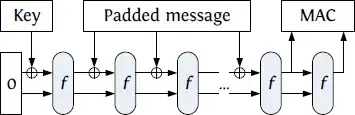
HMAC is briefly discussed in the Keccak submission (section 5.1.3), but I do not understand that a proof is given or a security claim made.
Update: that makes reference to section 5.1.1 which I now read as suggesting that we should have the HMAC blocksize $b$ multiple of the so-called bitrate $r$; thus for output $\ell$ of 224 (resp. 256, 384, 512), $b$ a multiple of 1152 (resp. 1088, 832, 576). That's in agreement with these NIST slides


