8

I work in a teaching hospital and we have a research project we're interested in pursuing. We'd like to 3D Print tubes we'd implant into rats to help with nerve regeneration. We're interested in the shape of the tubes right now, more so than what material it is or whether it's biocompatible etc..

So this question isn't necessarily about what type of plastic or whatever we should print in. My question is more so:

We'd like to print a tube that's 1 mm in diameter, about 1 cm long and has as many micro "tubes" crammed through it as possible, something like this:
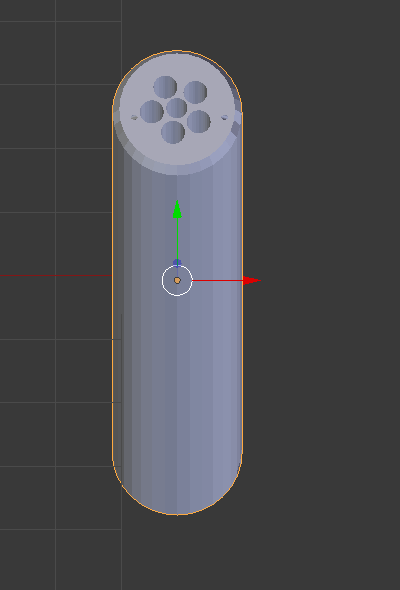
Tube containing micro tubes

I currently have a Stratasys j750 in my lab, a UPrint Se and a Prusa i3 Mk3s. They all work well but for the detail I'm looking for, come up a bit short. They have advertised accuracies of 14 microns (well, the j750) but thats just in the z direction, x and y are more like 200. If I went to get PRECISE, what technology should I look into?

Trish
  • 22,760
  • 13
  • 53
  • 106
Joseph Crozier
  • 390
  • 5
  • 19

4 Answers4

4

This is an interesting question. A good thing to note when we start talking about SLA and other jewelry grade 3d printing, that you will have to factor in the materials toxicity when we start talking about medical applications. You can also look into DLP 3d printers but they will not have as good quality.

What can help you right now is these SLA printers I see that form 3 has 25 microns, with a laser dot of 85. Well within your tolerances. Just make sure to get dental grade or medical grade resin.

Note that if there are bends, then you will have issues with SLA printing, depending how steep the angles are.

There are other technologies, such as metal 3d printing or SLS printing, that will likely be out of your price range such as the HP Metal Jet that can do 21 -xy by 50 -z microns. Or binder based 3d printing which will have the best internal geometry, as powder will act as support, and is easily removed.

There are many specifically in the bio printing area that might be what you are looking for as well, this is more an alternative. You can look into what the researchers at Penn has been doing, where they have been using Sugar to create vascular networks. As far as I know they do not sell it as a product at this time. Here is more information about scaling vascular networks

See here for more information about other printing technologies

JJJ
  • 3,133
  • 3
  • 15
  • 29
2

The typical low-end consumer printers that are so common now in the $100-800 range (yes, I've seen small ones sell that cheap) cannot achieve this, even with special nozzles.

But your machine is a bit nicer than that. Looking online at the manufacturer's page for the machine, we find these specifications:

LAYER THICKNESS
55 microns

BUILD RESOLUTION
100 +/- micron accuracy

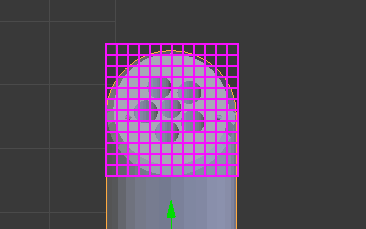
That's not gonna cut it. 100 microns is .1mm. +/- 100 microns means it can error that much in either direction from where things should be. To illustrate why this is too much, I'll use the image of the tube in the question, with the 1mm diameter as a scale, and layer the 100micron error potential as a grid over the image:

Margin of error

This grid doesn't show the size of the filament: just margin for error. It's getting close to what we need, but it's not there yet. To reliably create your tubes, you want the error to no more than 1/4 the diameter of a tube itself. Based on the image, the tube size is about 180 microns, so you want to look for something with an error in the range of +/-45 microns. _Maybe you could do this with a tube — more of a rounded rectangle — lying on it's side.

Joel Coehoorn
  • 2,720
  • 4
  • 19
  • 34
1

Update on this:

Per this article: 3D printing strategies for peripheral nerve regeneration

There are a few 3d printing technologies beyond your typical FDM/SLA/Polyjet that can get this small.

  • Melt Microextrusion
  • two photon polymerization
  • Something called MEW
  • continuous liquid interface production

I found various articles where someone "printed" that small, but it was often kind of a misnomer where technically something was made additively, but it wasn't a "printer" that you could go buy. I think two photon polymerization may be the "best" actual printing method for what I want, though the price tag associated with that style of printers may be out of my range. But it can definitely get that small, this technology can apparently get down into the nanometer range.

Greenonline
  • 6,748
  • 8
  • 40
  • 68
Joseph Crozier
  • 390
  • 5
  • 19
0

FDM/FF printers can#t achieve those resolutions due to several constraints. The biggest problems are wall thickness and resolution:

The print needs to be made from walls that are at least one nozzle wide. Commonly available nozzles go down to the 0.15 to 0.2 mm area, so the thinnest wall has to be at least this wide or be ignored.

The resolution is probably an even bigger problem: common consumer grade and industrial machines can get dialed in to have errors down to the 0.1 mm. Which would be, with the aforementioned smallest nozzles, up to half a wall width shift! Shifting the print by that would destroy the functionality of the print surely.

But, is there a solution?!

The only solution that comes to my mind is using a resin based printer like SLA or DLP. SLA printers can get down to 0.025 mm layer height, usually demand a minimum of 0.14 mm wall thickness, but newer machines can cut that almost by two.

The error on the SLA Form 2 machines is, compared to its minimum wall width, pretty much nonexistent for features of about 10% larger than its spot size (0.144 mm), so for 0.15 mm and up it prints pretty much spot on. Extrapolating this means that you'll need a SLS machine such as the Form 3, for minimum reliable wall lines of roundabout 0.09 mm. However, one wall thickness is usually bad, but it might achieve walls of 2 perimeters, coming down to about 0.16 mm.

Trish
  • 22,760
  • 13
  • 53
  • 106