3

I just discovered automatic bed leveling (ABL) probes that only use a microswitch.

For example, the FreeABL as shown below:
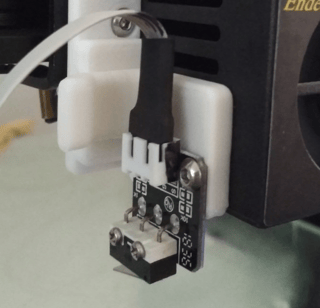
Photo of a FreeABL installed on an Ender 3

Source: Thingiverse.com

Or, the magnet mounted KlackEnder as shown below:
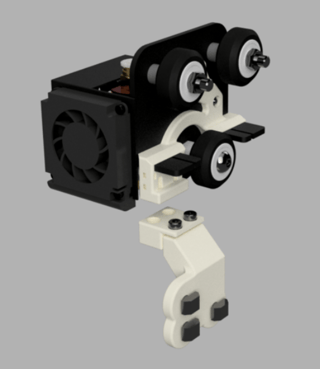
3D rendering of a KlackEnder bed leveling probe

Source: Thingiverse.com

Both use the simple concept of probing the bed using a microswitch instead of an optical or retractable touching probe, such as the popular BLTouch. However, since no measurement other than touch can be made, how reliable and accurate are such methods? Did someone ever run a Probe Repeatability Test (M48) for such microswitch based automatic bed leveling probes, or have experience regarding its reliability?

For reference, a 10-probe M48-test using my CRTouch results in a deviation of 0.000750.

Bob Ortiz
  • 1,255
  • 1
  • 10
  • 44

1 Answers1

5

I use them both for my Ender 3 home-against-bed and for my delta-calibration probe, and they work reasonably well. Of course, as noted in a comment by Fritz, you should remove the metal lever arm, as that amplifies any error, as well as introducing its own non-reproducibility through arm stiffness that may vary with temperature.

I forget the actual spread of values I get probing my delta, but my Klipper probe configuration has samples_tolerance set to 0.015 mm, meaning that, when it probes each point 5 times, it will start over if it gets measurements that differ by more than that amount, and normally it does not restart. However, with it previously set lower (probably 0.005 mm but I don't remember for sure), I did on occasion hit instances of it repeatedly failing. So, in my usage, it was repeatable with an error margin of something greater than 5 microns but less than 15. I don't think that's too bad.

The particular switch/PCB I use was a cheap generic "Ender 3 endstop switch replacement" off Amazon.