0

When I first got my 3D printer (a FlashForge Adventurer 3), it came with a sample pack of filament. With this filament, I was able to use skirts for my first layer. When the sample filament ran out, I switched to Hatchbox PLA filament. For some reason, I cannot use skirts with the Hatchbox filament. Now, whenever I try to print something with a skirt, the print moves around, ruining it. The only first-layer that works now are rafts, which I do not like, as they use up more filament and are more of a pain to remove. Is anyone else having this problem? If so, what are some workarounds to this issue?Here are the failed prints. I terminated them mid-way, as they started to shift on the build plate.
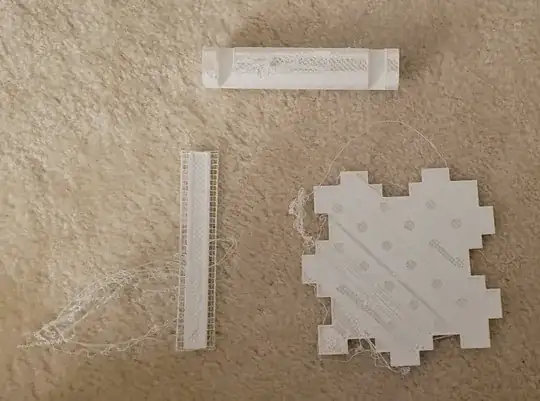
Here are the failed prints. I terminated them mid-way, as they started to shift on the build plate.

shwin320
  • 307
  • 4
  • 10

3 Answers3

2

It is unlikely this is a filament material issue since many of us have used Hatchbox PLA without this issue. This is a first layer adhesion issue.

  1. Your bed may not be clean, or the bed may have had an adhesion layer you cleaned off.

  2. Your nozzle may be too high on the first layer.

  3. Your bed my not be level.

  4. Glue sticks can help adhesion. Glue sticks usually don't post the composition on the packaging, but Elmer's glue sticks work. Elmer's washable makes it easy to remove the old layer before adding a new one. There are also glue sticks specified for 3D-printing.

Here's a discussion on glue sticks: Are all glue sticks PVA-based? How to find out?

Perry Webb
  • 2,376
  • 2
  • 13
  • 19
2

PLA is a forgiving filament, you can even print such filament without a heated bed. Although there are differences in quality between brands, PLA shouldn't need a raft to be printed. Hatchbox filament is not considered as a low quality type of filament; it is economical and has been around since 2013. A raft is a structured platform that is specifically used for high temperature and or high shrinkage types of filament, PLA is not such a filament and shouldn't need a raft. This implies that something is wrong with getting the filament sticking to the plate. Good adhesion requires a levelled bed, a correct initial nozzle to build plate distance (e.g. paper thickness) and possibly an adhesive like a glue stick, special adhesion spray, a textured bed or blue tape, etc.

0scar
  • 37,708
  • 12
  • 68
  • 156
0

Please try one (or more) of the following:

  1. Change the temperature of your heated bed (50 - 60 °C)

  2. Check your nozzle height (0.15 - 0.25 mm is what I use)

  3. Make sure your bed is level (Maybe use a leaving stick (or whatever those bubble things are called))

  4. Use adhesion. Start with painter's tape (least damaging, easy to remove), then use a glue stick or even hair spray if necessary.

  5. Be sure the bed is clean (I recommend glass cleaner 1-3 squirts and then a light scrub of a paper towel)

Greenonline
  • 6,748
  • 8
  • 40
  • 68
Greenreader9
  • 131
  • 5