${\color{#c00}{\rm\bf{New\;proof\;.}}}$
We want to prove a stronger inequality $2^n \ge n+1,\; \forall n\in\Bbb Z^{+}.$
Consider the following construction, which involves a one-to-one correspondence between the terms :
$$
\begin{align}\underbrace{\begin{array}{cccccc}
2 & 2^2 & 2^3 & 2^4 & \dots & 2^n \\
\downarrow & \downarrow & \downarrow & \downarrow & \dots & \downarrow \\
2 & 2 & 2 & 2 & \dots & 2
\end{array}}_{n\;\text{terms}}\end{align}
$$
We can write the following system of inequalities :
$$
\begin{cases}\begin{align}2&~\ge~ 2\\
2^2&~\ge~2\\
2^3&~\ge~2\\
2^4&~\ge~2\\
&\dots\\
2^n&~\ge~2\end{align}\end{cases}
$$
By summing up all inequalities side by side :
$$\small{\underbrace{2+2^2+\dots+2^n}_{n \;\text{terms}}\ge \underbrace{2+2+\dots+2}_{n\;\text{terms}}}$$
Based on the following general geometric structure
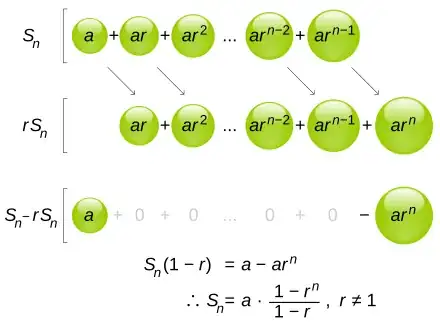
and applying the geometric series formula above, we have :
$$
\begin{align}2^{n+1}-2&\ge 2n\\
2^{n+1}&\ge 2(n+1)\\
2^n&\ge n+1\end{align}
$$
This completes the proof .
Note that, the right hand side of the inequality has been proven in previous answers and comments .
$\color{#0a0}{\rm\bf{Second\;proof\;.}}$
Note that, $n_0>2^{n_0}$ implies the following inequalities :
$$n_0>2^{n_0}>2^{2^{n_0}}>2^{2^{2^{n_0}}}>\dots$$
which tells us $n_0$ can not be a finite number . A contradiction .
Above, we used the fact that if $m > n$, then $2^m > 2^n$, which follows from the equivalent statement $2^n(2^{m-n} - 1) > 0$ . This is based on the fact that if $k \in \Bbb{Z}^{+}$, then $2^k > 1$ .
$\color{#a0a}{\rm\bf{Old\;proof\;.}}$
Below, we prove the left-hand side of the inequality using the well-known method of Proof by Contradiction . Note that, the same can be applied to the right-hand side as well .
Since the problem statement cannot be false for all $p$, we can assume that there exists a minimum value of $p=p_0\ge1$ for which the statement does not hold .
Let $n_0=\min\{n\}\ge 2$, where $n=p+1$, such that $n_0 \ge 2^{n_0}$ and $n_0\in\Bbb Z$ .
Let
$$n_0-2^{n_0}=k \ge 0$$
By our assumption, we have :
$$
\begin{align}n_0-1-2^{n_0-1}&<0\\
n_0-2^{n_0-1}&<1\\
n_0-\frac{n_0-k}{2}&<1\\
n_0+k&<2\end{align}
$$
which is a contradiction .


